
Streptokokken stellen besonders ein Problem während der Aufzucht von Ferkeln dar. In Kooperation mit dem Institut für Bakteriologie und Mykologie wird die Immunantwort des Schweins in Kontakt zum Erreger und in der Entwicklung von Impfstoffen gegen Streptokokken untersucht.
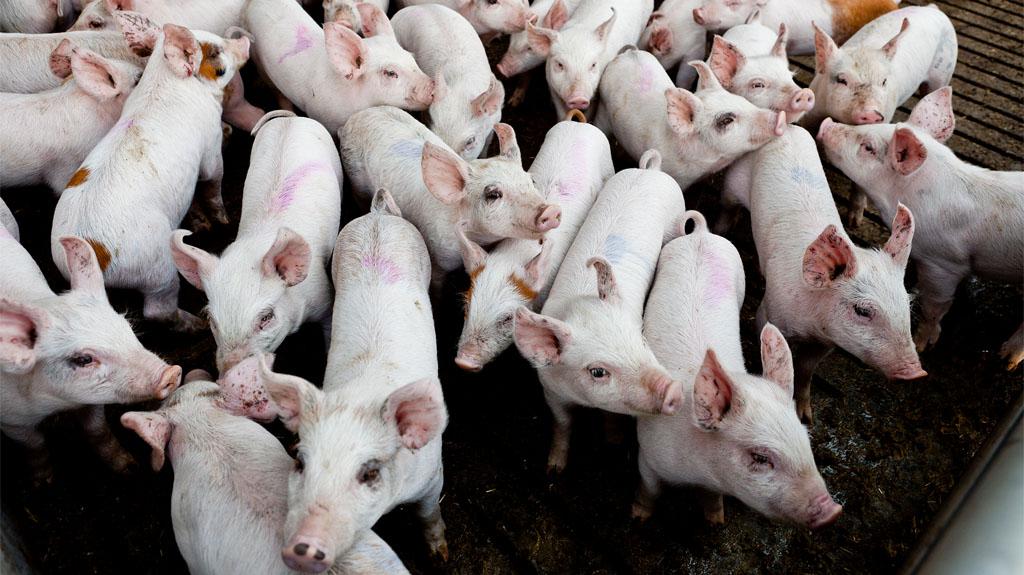
Immunological investigation of Streptococcus suis infection in pigs
Investigation of the immune response to S. suis in pigs
Streptococcus suis is of great importance in piglet rearing as one of the most common bacterial pathogens in pigs and also has zoonotic potential. The natural habitat of S. suis is the upper respiratory tract, especially the tonsils and the nasal cavity, as well as the intestinal and genital tract. This clinically inapparent colonization with S. suis is common in domestic and wild boar, although only a few strains have high virulence. In piglets, however, invasive infections can occur more frequently, which can lead to serious diseases such as meningitis, septicaemia, arthritis, endocarditis, serositis or bronchopneumonia. The increased susceptibility to invasive infections in piglets is mainly related to the decrease in maternal antibody levels, i.e. during the so-called immunological gap.
Due to the close project-related networking with the Institute of Bacteriology and Mycology, it is possible to perform immunological analyses of immunized or experimentally infected pigs with S. suis. One focus of the work is the establishment of methods for the detection of antigen-specific lymphocytes in pigs. These detection methods are already established in mice and humans and will be transferred to pigs. We have succeeded in detecting antigen-specific T-helper cells in PBMCs of immunized pigs (1).
In addition, we are interested in how exactly the immune response to S. suis of cells of the innate immune system in pigs looks like in order to investigate the form in which the adaptive immune response is modulated by contact with S. suis. In close cooperation with the Institute of Bacteriology and Mycology, mechanisms of killing in the blood are also investigated (2).
The closer characterization of the immune mechanisms can contribute to the development of effective vaccines and vaccination strategies against this bacterial pathogen.
Further information can be found on the research page of the Institute of Bacteriology and Mycology.
Approved projects and scholarships:
- "Infect Control 2020-VacoME" (BMBF: 03ZZ0816C)
- Doctoral student promotion position for Florian Hohnstein
Publications:
(1) Ebner, F, Front Immunol. 2017 May 17;8:565.
(2) Rungelrath, V, Virulence. 2018;9(1):1314-1337
(3) Weiße C, Vet Res. 2021 Aug 25;52(1):112.
Cooperations:
- Prof. Dr. Christoph Baums (Leipzig, Germany)
- Prof. Dr. Susanne Hartmann (Berlin, Germany)
Persons involved:
PD Dr. Uwe Müller
Anne-Marie Seidel
Silke Lehnert
Alumni:
Dr. Nicole Schütze
Florian Hohnstein